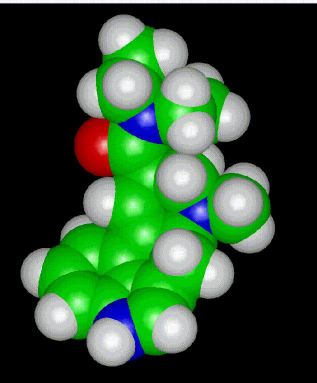
 The man who discovered lysergic acid diethylamide-25 died this morning.
There’s no question that Albert Hofmann and his discovery — LSD — had at least an indirect impact of thousands — or maybe millions — of lives, as the powerful hallucinogen made its way around the planet in the 1950s and 60s.
Hofmann’s impact on me? I can’t help but wonder what the Grateful Dead would have been without the drug. It’s possible that the band might not have even existed.
What started as yet another faceless Bay Area rock ‘n’ roll band in 1965 could have stayed that way, playing pizza parlors and bars until it faded away after a year or two. The convergence of many random factors — LSD being a pretty important one — meant that the band hung around long enough to become a part of American culture.
And it meant that the band hung around long enough for a bunch of kids from Columbus started traveling to Cleveland, Buckeye Lake, Pittsburgh, Cincinnati and well beyond to experience something they couldn’t find anywhere else.
The thing that started was a chance meeting of friends of friends — members of the Dead and the people who orbited around author Ken Kesey’s considerable gravity. Kesey’s group had already started experimenting with hallucinogens, even going as far as traveling across the country to meet Timothy Leary, whom they found to be far too academic in his approach to the drug.
Kesey and the Dead conjured a series of Acid Tests — not really concerts, but multi-media events that loosely revolved around whatever musicians were playing at the time. Though other bands played, the Dead was the house band for the events, and band members have maintained through the years that the freedom at the Acid Tests — along with the fact that they were playing while dosed — allowed them to let go of any perceived expectations … and just play.
You can’t discount the financial impact that the drug had on the band’s progress either. Early on, Owsley Stanley became infatuated with the band’s music, to the point where he financed their operations — gear, travel, rehearsal time, living space and expenses — with money he made making the finest LSD available. It was another freeing experience — GD was allowed to grow without the financial worries that can scuttle a young band. By the time Warner Brothers showed up in San Francisco with a record contract and even more money, the Grateful Dead was a fully formed idea — and its 30-year journey was underway.
By the time I started following the band in 1984, the psychedelic experiences for the band members were largely over, although all referenced an occasional catching-up experience. Other, more harmful drugs were still there — Garcia’s diabetic coma in 1986 and his “exhaustion” in 1992 largely were the fault of pursuing his heroin addiction at the expense of his health. And while it was a heart attack that killed him in 1995, it’s important to remember he died just hours after checking in to a rehab clinic.
I know — there’s a trade-off here. Did the band’s early drug experiences contribute to an outside-the-mainstream attitude about using more serious substances later on? Probably. Did that same history lead to a unique musical experience that reached millions of people over three decades? Without question.
I don’t know whether Hofmann was ever asked about the Grateful Dead. He was asked repeatedly about drug he discovered, and the questions often came knee-jerk angles. Through his 102 years, he maintained that LSD was a useful medical tool — albeit a powerful one that shouldn’t be abused — and not the scourge it was portrayed to be. Just last year, the Swiss government decided it agreed, approving LSD for use in psychotherapy in limited cases.
Hofmann, who used the drug occasionally throughout his life, according to the Associated Press obit, said LSD could help open a person’s eyes — although he pointed out that meditation, dance, music or fasting could accomplish that as well. For this discussion, music is the important part of the equation for me. Although without Hofmann’s discovery, I doubt I would have ever come to know that connection as well as I do.
 Uncle Crappy